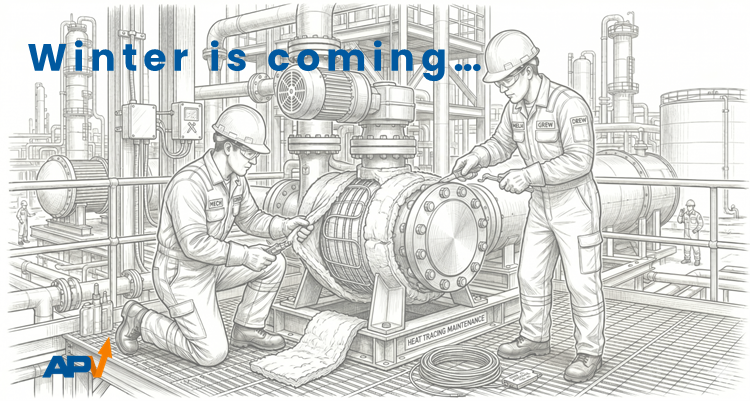
Winter is Coming
Written on: April 17, 2026
Here's something I've watched happen at refinery after refinery: the first hard freeze hits, heat tracing fails on a critical line, and suddenly everyone's asking why nobody caught it sooner.
The answer is almost always the same. They were planning to get to it in the fall.
Fall is too late. Spring is when winterization planning actually belongs, and most facilities are leaving serious value on the table by treating cold weather preparation as a fourth-quarter problem.
The Window Most Plants Miss
Your facility just came through a winter. Right now, you have something genuinely valuable: fresh, firsthand knowledge of exactly where your systems struggled. Which heat tracing circuits caused problems? Which insulation failed inspection? Which areas were your field techs babysitting through every cold snap?
That knowledge has a short shelf life. By fall, the details blur. The techs who lived through the hard nights in January have moved on to other problems. The institutional memory of what actually happened fades into a general sense that "we had some issues."
Spring is when engineering teams should be sitting down with operations to go through that winter's field data, identify design flaws, and build the packages that will get executed in summer when insulation can be safely removed, and heat tracing components can actually be accessed without risking operational disruption.
Miss that window, and you're patching in the fall again. Same problems. Same emergency calls. Same February conversations about why this keeps happening.
The Cycle Most Plants Don't Have
Effective winterization isn't a fall checklist. It's a year-round discipline with a distinct purpose in each season.
Winter is operations mode. Heat tracing is running, field techs are troubleshooting based on conditions, and nobody is pulling insulation. You're collecting data and managing alarms, not executing improvements.
Spring is the planning phase. Engineering analyzes what winter revealed. Improvement packages get scoped, contractors get engaged before peak demand drives their calendars full, and materials get sourced before supply chain pressure hits. This is the leverage point.
Summer is execution. Warm weather means safe access. Insulation comes off, heat tracing gets upgraded, and the engineering work from spring actually gets done.
Fall is verification. Circuits get audited, changes get commissioned, and readiness gets confirmed before the cold arrives. Not scrambled for. Confirmed.
The facilities that do this well don't have winterization emergencies. They have winterization programs.
Why the Business Case Writes Itself
Emergency repairs on heat tracing failures don't just cost the repair. They cost unplanned downtime, expedited materials, contractor premiums, and in the worst cases, regulatory and environmental consequences that follow the facility for years.
Spring planning eliminates most of that. Contractors engaged in April cost less than contractors called in October. Materials sourced in May arrive on schedule. Engineering packages built in spring get executed in summer without the time pressure that drives shortcuts and missed scope.
And there's a safety dimension that gets underappreciated. Cold weather failures aren't just operational problems. They're personnel hazards. The crew troubleshooting a failed heat trace line at 2 AM in January is working in conditions that spring planning could have prevented entirely.
What Good Looks Like
Facilities that manage winterization well share a few common practices. They conduct thorough heat tracing and insulation audits in spring while winter performance is still fresh. They develop asset protection strategies before contractor and material markets tighten. They have alarm management workflows that identify new issues quickly, set clear priorities, and get field assessments done fast enough to matter. And they run fall readiness audits as a verification step, not a starting point.
That last one is worth emphasizing. A fall audit that finds problems is too late to fix them properly. A fall audit that confirms spring and summer work held up is exactly what it should be.
The Bottom Line
Winter will come back. It always does. The only question is whether your facility is building toward it all year or scrambling when it arrives.
Spring is the moment that separates those two outcomes. The planning done now determines whether next February is routine or expensive.
APVantage helps industrial facilities optimize their maintenance execution practices by helping teams not only understand the problem but develop solutions that actually fit their unique situations. Winterization is one of the places we see the biggest gap between what facilities are doing and what's actually possible.
John Crager is Vice President and General Manager at APVantage LLC. He has spent more than 30 years in industrial maintenance, capital project, and turnaround operations.
APVantage helps industrial organizations optimize their maintenance execution practices by helping teams not only understand the problem but develop solutions that actually fit their unique situations.