Safety Recognition Is a Leading Indicator, Not a Victory Lap
Written on: August 11, 2026
THE REAL COST OF WORK
Somewhere in your plant this week, a craft professional is going to open a work package, walk the job, and find that the isolation on paper doesn't match the isolation in the field.
What happens next tells you almost everything about your safety culture.
He either stops the job, or he works around it. And which one he picks has less to do with the sign at the gate than with what he's watched happen to the last three people who stopped a job.
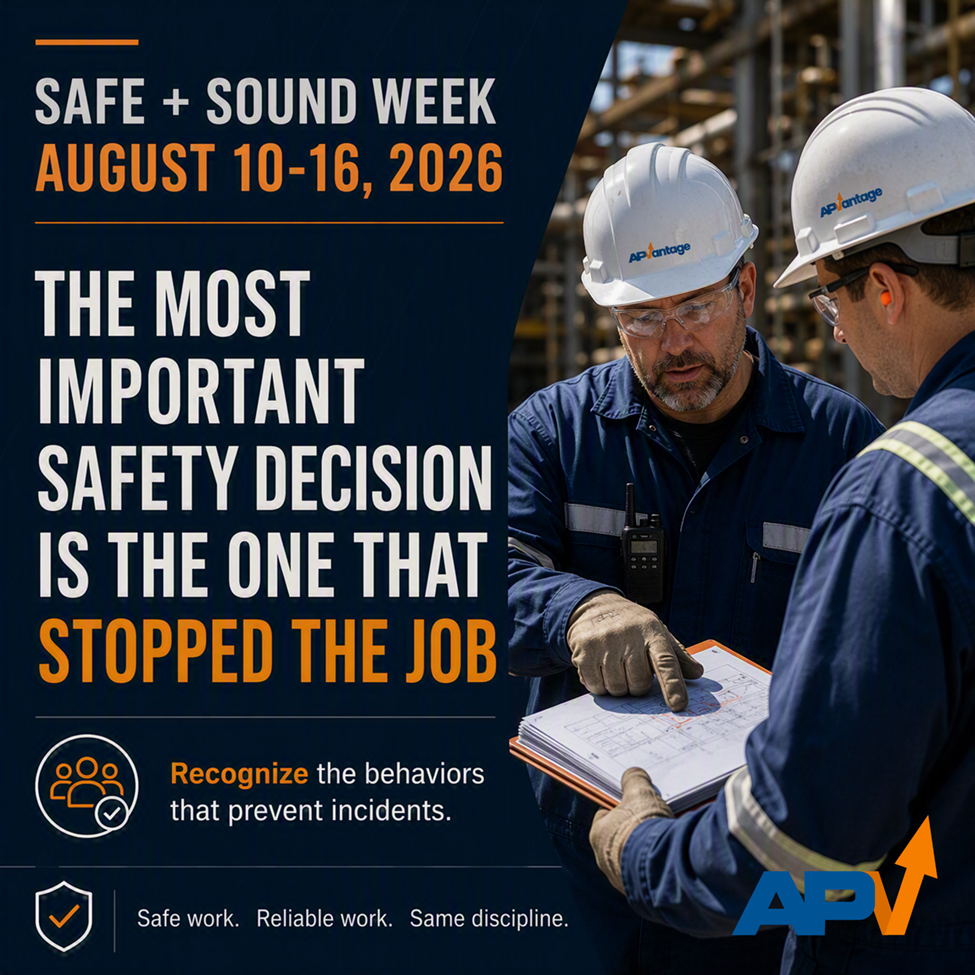
This week, August 10 through 16, is Safe + Sound Week. OSHA built the 2026 emphasis around recognizing safety and health achievements and strengthening proactive programs (OSHA).
Recognition sounds like the soft item on the list. It isn't. Handled right, recognition is one of the few levers you've got that changes behavior before the incident instead of after it.
Recognize the Work That Prevents the Incident
Most safety recognition in heavy industry rewards lagging outcomes. Zero recordables. A project closed with no lost time. A year on the board without an injury.
Those numbers matter. They just arrive too late to teach anybody anything, and they reward the absence of a bad event rather than the presence of good judgment. Sometimes the absence was earned. Sometimes it was luck holding.
The real cost of work gets decided much earlier than the incident. It gets decided in the planning meeting, at the walkdown, during the permit review, and in the moment somebody notices the package doesn't match the field. Those are the moments worth naming out loud, because that's the behavior you want repeated on the next job.
So recognize people for things like:
- Raising a concern before work starts, when it's still cheap to fix.
- Catching and correcting an exposure during a walkdown.
- Improving a job plan so the next crew executes it cleaner than they did.
- Calling a stop-work pause when scope, conditions, or risk change mid-job.
- Coaching a colleague without embarrassing him.
- Reporting a near miss or a good catch so the organization learns without anybody bleeding for the lesson.
None of that is about rewarding rule-following. Rules are the floor. What you're reinforcing is ownership, learning, and the professional judgment complex work actually requires.
"Good Job" Teaches Nobody Anything
Generic praise is pleasant and useless. People appreciate it and forget it by lunch, and the organization learns nothing about what to repeat.
Compare it to this:
"Thank you for stopping the job when you found the isolation didn't match the work scope. You protected the crew, you prevented rework, and you gave planning what they needed to correct the package before execution."
Same gratitude. Completely different payload. That message names the specific decision, and it connects the decision to outcomes people already care about. Crew protected. Quality up. Schedule defended. Now the guy standing next to him knows exactly what earned that, and he knows it's safe to do the same thing tomorrow.
Timing matters as much as specificity. Recognition delivered three weeks later at a quarterly meeting reads as administration. Delivered the same shift, in front of the crew, it reads as real.
Which means leaders have to be near the work to see any of it. Walk the site. Sit in on the pre-job brief. Ask crews what's working, what's creating friction, and what's likely to bite on the next job. Then recognize the people who surface the problems and help fix them, not just the ones who hit the date.
Every Safe Win Carries Operational Intelligence
Here's what most organizations leave on the table. A safe-work success isn't just a feel-good story. It's data about how your plant actually runs.
A lift that went clean. A lockout review that caught something. A crew that rewrote an unsafe sequence on the spot and made it stick. Every one of those contains a practice worth standardizing, or a gap in the work package worth closing before the next crew inherits it.
Try a short conversation this week with supervisors, planners, and craft teams:
- What did somebody do recently that made the work safer?
- What condition or decision could have turned into an incident, and didn't, because a person acted?
- What do we carry forward into the next work package, outage, or project phase?
Then capture the answers and actually move them. Into toolbox talks. Into daily coordination. Into planning reviews and job plan revisions, where they change what the next crew sees when they open the package.
A small story about somebody's good judgment travels further in a craft workforce than any metric on a dashboard ever will. People repeat stories. Nobody repeats a bar chart.
Recognition Is How You Buy Candor
People report hazards, challenge assumptions, and stop work when they believe leadership will respond well. That belief isn't built by policy. It's built by watching what happens to the people who speak up.
Recognition is how you make that visible. Especially when you're recognizing candor rather than production, because those two occasionally point in opposite directions and everybody on the floor knows it.
The strongest operations I've been around don't force a choice between schedule, cost, quality, and safety. They've figured out that the same root causes wreck all four at once. Weak planning. Unclear scope. Poor coordination. Rushed decisions made to protect a date. Safe work and reliable work come from the same discipline, and so do the failures.
The Bottom Line
Recognition isn't a handshake after the milestone. It's a leading indicator, and it's one of the cheapest ones you own.
During Safe + Sound Week, find the people whose decisions make reliability possible. The planner who fixed a work package nobody asked him to fix. The supervisor who left room in the brief for questions. The operator who flagged a changed condition. The craft professional who refused to normalize a risk everybody else had gotten comfortable with.
Name what they did, say it out loud, and say it the same week it happened.
Their work matters. Their voice matters. And their example is how a safer, stronger plant gets built, one decision at a time.
John Crager is Principal Advisor at APVantage LLC. He has spent more than 30 years in industrial maintenance, capital project, and turnaround operations.
APVantage helps industrial organizations optimize their maintenance execution practices by helping teams not only understand the problem but develop solutions that actually fit their unique situations.
Safe + Sound Week runs August 10 through 16, 2026, focused on recognizing safety and health achievements and strengthening proactive safety programs (OSHA).